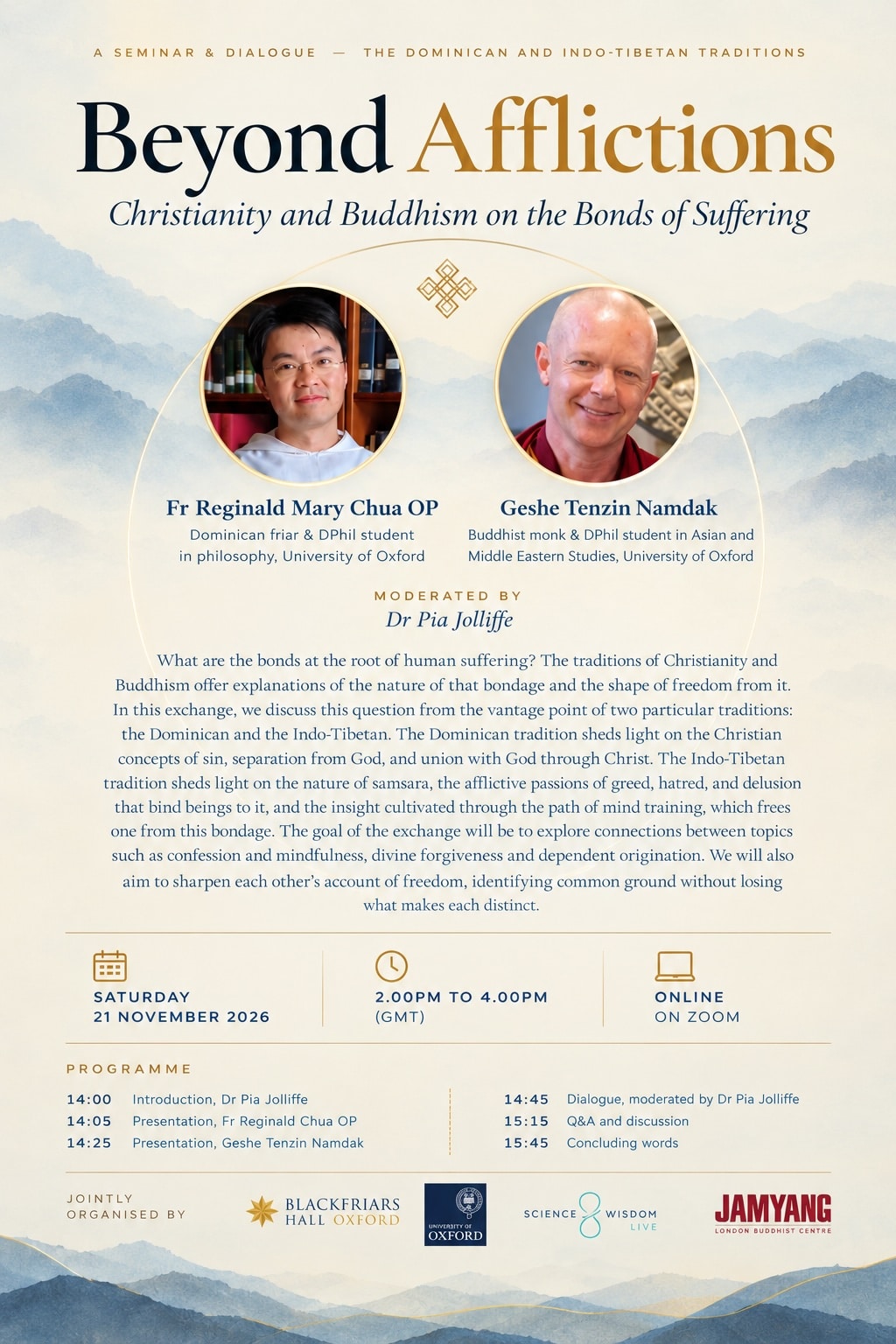
Beyond Afflictions: Christianity and Buddhism on the Bonds of Suffering
| Tenzin Namdak | |
| 21 November 2026 | |
| 2:00 pm | |
| Online on Zoom |
What are the bonds at the root of human suffering?
The traditions of Christianity and Buddhism offer explanations of the nature of that bondage and the shape of freedom from it. In this exchange, we discuss this question from the vantage point of two particular traditions: the Dominican and the Indo-Tibetan.
The Dominican tradition sheds light on the Christian concepts of sin, separation from God, and union with God through Christ. The Indo-Tibetan tradition sheds light on the nature of saṃsāra, the afflictive passions of greed, hatred, and delusion that bind beings to it, and the insight cultivated through the path of mind training, which frees one from this bondage.
Geshe Tenzin Namdak, Jamyang’s resident teacher, and Fr Reginald Mary Chua OPhan, a Dominican friar of the Province of the Assumption (Australia) and previously University Chaplain on UNDA’s Sydney Campus (2020–2025), will attempt to explore connections between topics such as confession and mindfulness, divine forgiveness and dependent origination, as well as aim to sharpen each other’s account of freedom, identifying common ground without losing what makes each tradition distinct.
The dialogue will be moderated by Dr. Pia Jolliffe, a member of the Las Casas Institute as a research scholar of Blackfriars Hall, University of Oxford. She is also Research Fellow at the Oxford Institute of Population Ageing.
There will be time for questions from the room and from online attendees.
About the Speakers

Resident teacher of Jamyang Buddhist London Centre, and part-time tutor at the University of Oxford’s Department for Continuing Education, where he teaches Buddhist Mind Science. He first worked as an environmental researcher, having graduated with a bachelor of science degree in hydrology. He took ordination from His Holiness the Dalai Lama before engaging in his formal studies in Buddhist philosophy and psychology at Sera Jey Monastic University. He completed the entire twenty-year geshe program at Sera Jey and the traditional one-year Vajrayāna study program at Gyüme Tantric College. As a translator, he contributed to Freedom through Correct Knowing (2022). He teaches worldwide and regularly engages in science and Buddhist philosophy dialogues.
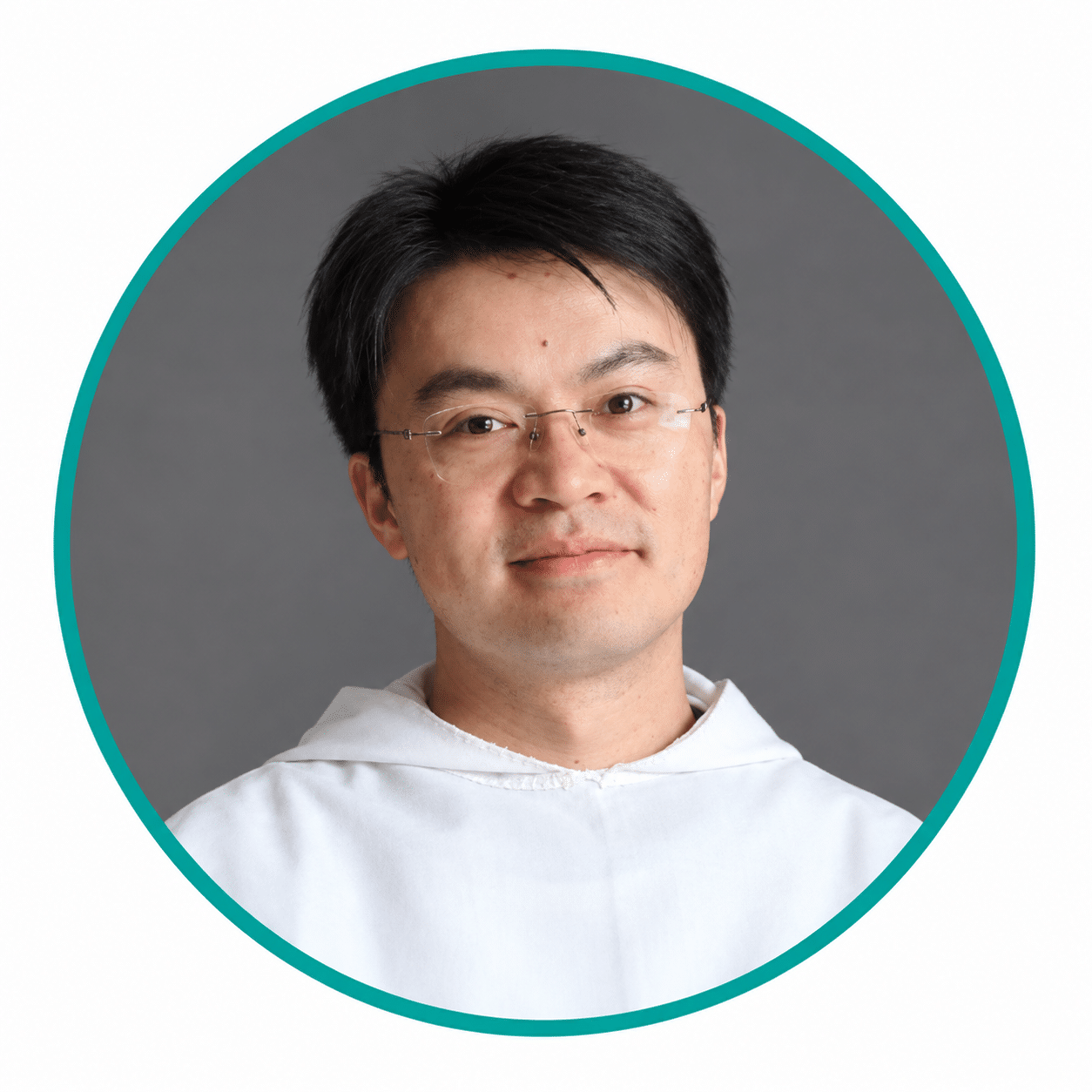
Fr Reginald Mary Chua OP
Fr Reginald grew up in Perth, Western Australia, before moving to Sydney to study philosophy at Sydney University, gaining an MPhil in philosophy. During this time, he met Dominican friars on campus, leading him to join the Australian Province of the Dominican Order in 2014. This led to pastoral and theological training in Melbourne, including a study of St Thomas Aquinas’s understanding of the concept of identity in Trinitarian theology. After being ordained a priest Fr Reginald served as a chaplain in Sydney at the University of Notre Dame Australia, where he also taught philosophy. He is currently undertaking a DPhil in philosophy at Oxford, taking a deeper look at the concept of identity through the work of the Catholic philosopher Peter Geach. He continues to have a particular interest in interreligious dialogue as well as dialogue between scholastic philosophy and Chinese philosophy, including Chinese Buddhism.
Partners
This event is organised in partnership with:

Registration
This event is open to all on donation, and registration is required. Please sign up on our Zoom registration page, by clicking the sign-up button below, to secure your spot and receive the English livestream link. Don’t miss this opportunity.
Recordings
We will record the session and share the recordings with attendees after the event. To receive the translated recordings, please ensure you register with our translation partners.
Submit Your Questions
We invite you to actively participate in this event by submitting your questions in advance. Your inquiries will help shape the dialogue, as our speakers will address selected questions during the event. Whether you’re curious about the intersection of science and spirituality or the philosophical insights of “no-self,” we encourage you to share your thoughts.
