This interactive online course on Buddhism and Quantum Physics will provide you with new tools to analyse your mind and investigate the nature of reality and the self.
With this fundamental shift in perspective, you can become more open to experiencing joy in daily life. This can help you to expand your worldview, improve your well-being, experience mindfulness, and cultivate a deeper meditation practice.
A Beginner’s Guide to Quantum Mechanics–Dr. John Realpe & Dr. Marco Colnaghi
Lesson 1: What is Quantum Mechanics?
•The uncertainty principle •Describing quantum states •Schrödinger’s cat •Wave–particle duality & double–slit experiment •The measurement problem (Wigner’s paradox) •Non–locality and entanglement
Lesson2: Interpretations of Quantum Mechanics?
•The Copenhagen interpretation •David Bohm’s implicate order •The Multiverse (many–worlds) •Carlo Rovelli’s relational interpretation •QBism •Other interpretations of QM
Module 2
Metaphysics, Buddhism, and Quantum Physics–Dr.Michel Bitbol
Lesson 1:Appearance and Reality in Western Thought
•Plato and the reality/appearance dualism •Heraclitus and Democritus •The birth of modern science: Newton, Kant, Husserl
Lesson2:Buddhist Epistemology & Quantum Physics •Buddhist epistemology: Mind–Only and Middle Way schools •The paradox of quantum reality •Interpretations of quantum mechanics •Quantum mechanics & Buddhist philosophy
Module 3
Reality and the Nature of the Mind–Prof. JohnDunne
Lesson 1:Buddhist Epistemology •Dharmakirti and Shantarakshita •“Sat”: the primacy of experience •Causality, cognition, and reality
Lesson2:Models of the World •The mind, discrimination, and mental models •Do patterns truly exist innature? •What constrains our models of the world?
Lesson3:Illusion and Reality
•Reality as a mental construct •Is there an ultimate model of reality? •The illusion of separation: conceptuality, suffering, and wisdom
Module 4
From Nagarjuna to Heisenberg and back — Geshe Tenzin Namdak & Guest Speaker Prof. Carlo Rovelli
Lesson 1:Nagarjuna & Quantum Mechanics •The observer and the observed: the relational interpretation •Without foundation: Nagarjuna & modern physics •Emptiness and dependent origination
Lesson2:Bias, Discrimination, and Models of the World •Models in classical and quantum physics •Ultimate and conventional reality
Module 5
Mind, Matter, and QuantumPhysics– Geshe Tenzin Namdak & Guest Speaker Prof. Carlo Rovelli
Lesson 1: The Nature of the Observer •Consciousness and quantum mechanics •Dependent origination and the nature of the mind Lesson2:The Mind and the Brain •The nature of consciousness •What is the relation between mind and matter? •Do laws of nature exist beyond our minds?
Module 6
How thingsExist, Experiential Meditation Workshop–Scott Snibbe
Part1:Analysis of Objects Part2:Analysis of the Self
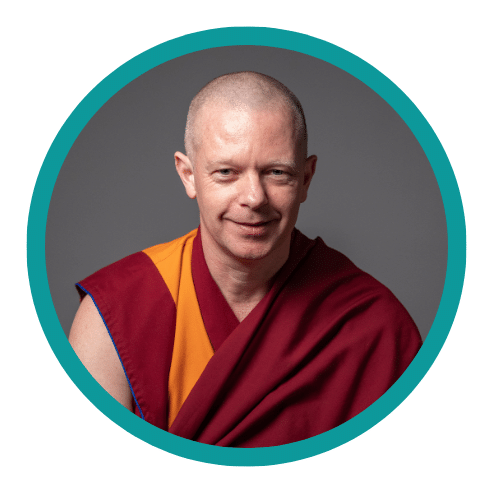
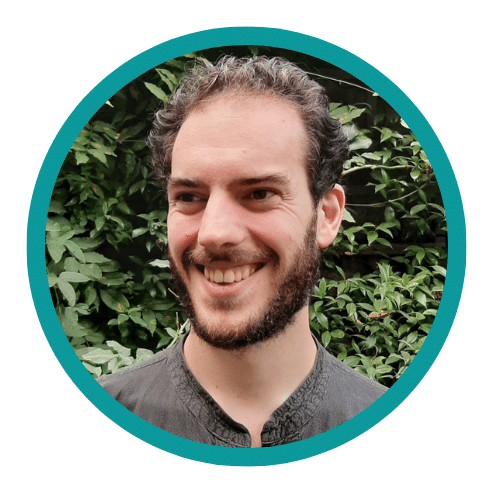
Geshe Tenzin Namdak first worked as an environmental researcher having graduated in hydrology from Van Hall Larenstein University, The Netherlands. He started studying Buddhism at Maitreya Institute in 1993 and took ordination from His Holiness the Dalai Lama before engaging in his formal studies in Buddhist philosophy and psychology at Sera Jey Monastic University, South India, in 1997. He completed the entire twenty-year Geshe program at Sera Jey in 2017 and the traditional one year Vajrayana study program at Gyume Tantric College in January 2019, the first Westerner to do so. Because of his deep interest and background in science and as a member of Sera Jey’s Education Department he spoke on and organized various dialogues and conferences on contemporary science and ancient contemplative wisdom of the mind and its philosophy. Currently, he is the resident teacher at Jamyang Buddhist Centre, London, and teaches worldwide.
Geshe Tenzin NamdakResident Teacher at Jamyang
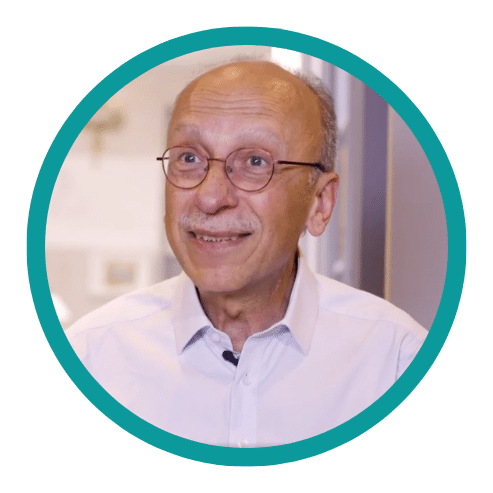
Dr. Michel Bitbol is Emeritus Directeur de Recherche at the CNRS, in Paris, France. He is presently based at the Archives Husserl, a center of research in Phenomenology. He received successively his M.D., his Ph.D. in physics, and his “Habilitation” in philosophy in Paris.
He worked as a research scientist in biophysics from 1978 to 1990. From 1990 onwards, he turned to the philosophy of physics. He edited texts by Erwin Schrödinger and developed a neo-kantian philosophy of quantum mechanics. In 1997 he received an award from the Académie des sciences morales et politiques for his work in the philosophy of quantum mechanics.
Later on, he studied the relations between the philosophy of physics and the philosophy of mind, working in close collaboration with Francisco Varela. He then learnt some Sanskrit and published a book (De l’intérieur du monde, 2010) in which he draws a parallel between Buddhist dependent arising and non-supervenient relations, in quantum physics and the theory of knowledge. He recently developed a conception of consciousness inspired from an epistemology of first-person knowledge, together with a phenomenological critique of naturalist theories of consciousness (La conscience a-t-elle une origine? 2014). More recently, he engaged a debate with the philosophical movement called “speculative realism”, and published a book about it (Maintenant la finitude, 2019).
Dr. Bitbol and Prof. Dunne were invited to participate in the event on which this e-course is based by our partner, Mind & Life Europe (MLE), and are Members of MLE.
Dr. Michel BitbolEmeritus Director of the CNRS
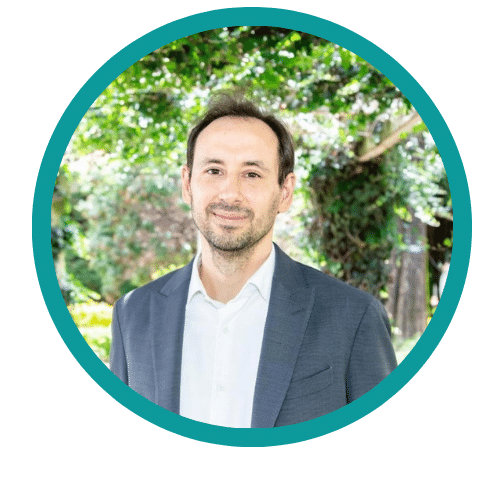
Dr. Marco Colnaghi is an interdisciplinary researcher and educator. His research aim is to develop theoretical models to better understand the evolution of life and mind. After his initial training as a physicist, he earned a PhD in Mathematical Biology and Complexity Science at University College London.
He currently works as Postdoctoral Researcher at the Vrije Universiteit Amsterdam, where he studies the evolution of human cooperation alongside Prof. Daniel Balliet (Vrije Universiteit Amsterdam) and Prof. Fernando Dos Santos (Universiteit van Amsterdam).
Before joining the Amsterdam Cooperation Lab, he was a Postdoctoral Research Fellow in Nick Lane and Andrew Pomiankowski’s lab at the Centre for Life’s Origins and Evolution (University College London). There, he investigated key milestones in the evolution of life, such as the origin of the genetic code, the evolution of eukaryotic life, and the origin of sexual reproduction.
Besides his academic research, Marco has been a meditation practitioner since his early twenties. He strongly believes that contemplative wisdom can have a transformative impact on our individual and collective consciousness, as well as on our scientific understanding of life and mind.
Dr. Marco ColnaghiPost Doctoral Researcher & Project Manager for SciWiz LIVE
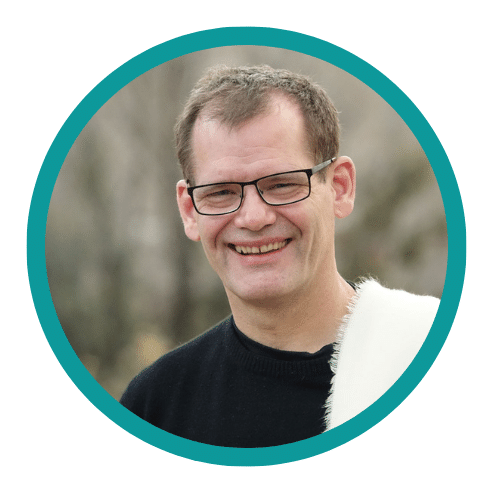
Prof. John Dunne (PhD 1999, Harvard University) is the Distinguished Chair in Contemplative Humanities at the University of Wisconsin-Madison, where he serves as Core Faculty for the Center for Healthy Minds and as the chair of the Department of Asian Languages & Cultures. John Dunne’s work focuses on Buddhist philosophy and contemplative practice, especially in dialog with Cognitive Science and Psychology. His publications appear in venues ranging across both the Humanities and the Sciences, and they include works on Buddhist philosophy, contemplative practices and their empirical examination and interpretation within scientific contexts.
John Dunne speaks in both academic and public contexts, and he occasionally teaches for Buddhist communities. His broader engagements include being a Fellow of the Mind and Life Institute, where he was previously a member of the Board of Directors, and serving as an academic advisor to the Rangjung Yeshe Institute in Kathmandu, Nepal.
Dr. Bitbol and Prof. Dunne were invited to participate in the event on which this e-course is based by our partner, Mind & Life Europe (MLE), and are Members of MLE.
Prof. John DunneDistinguished Chair in Contemplative Humanities at the University of Wisconsin-Madison
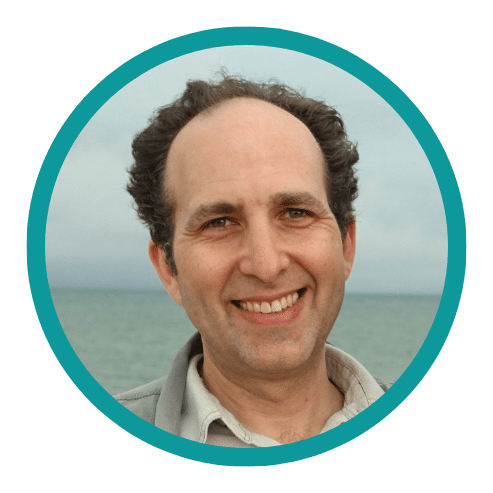
Scott Snibbe is the Executive Director of A Skeptic’s Path to Enlightenment, a nonprofit organization and popular podcast dedicated to teaching secular forms of analytical meditation. Snibbe is a longtime student of Tibetan Buddhism whose teachers include Geshe Ngawang Dakpa, Choden Rinpoche, Ven. Rene Feusi, Lama Zopa Rinpoche, Gyumed Khensur Rinpoche Lobsang Jampa, and His Holiness the Dalai Lama. Inspired by his teachers, he leads meditations that infuse the pure lineage of the great Buddhist masters with science, humour, and the realities of the modern world.
In addition to his work teaching meditation, Snibbe is a digital artist who has created bestselling art and music apps and interactive art installations. He has collaborated with musicians and filmmakers including Björk, James Cameron, and Philip Glass and his interactive art has been collected by both science and art museums, including the Whitney Museum of American Art and New York’s Museum of Modern Art.
His book, A Skeptic’s Path to Enlightenment, is coming out in December 2023.
Scott SnibbeFounder of A Skeptic's Path to Enlightenment
Dr. John Realpe was the first Scientific Research volunteer at Science & Wisdom LIVE (2021-2022), in which role he conducted research about our themes and wrote blogs for our website. John is currently taking a break from his volunteer role, but hopes to return in the future.
John is a professional academic himself, with a PhD in Physics from the Polytechnique University of Turin, Italy. His research is focused on the intersection of complex systems, quantum AI, cognitive science and evolutionary biology, and he also worked at NASA and at the University of Manchester. Besides his academic work, John is interested in how science and contemplative practices can work together to further dialogue on important issues and deeply supports the spirit of Science & Wisdom LIVE in trying to make this happen.
Dr. John RealpeScientific Research Volunteer for Science & Wisdom LIVE
Geshe Tenzin Namdak first worked as an environmental researcher having graduated in hydrology from Van Hall Larenstein University, The Netherlands. He started studying Buddhism at Maitreya Institute in 1993 and took ordination from His Holiness the Dalai Lama before engaging in his formal studies in Buddhist philosophy and psychology at Sera Jey Monastic University, South India, in 1997. He completed the entire twenty-year Geshe program at Sera Jey in 2017 and the traditional one year Vajrayana study program at Gyume Tantric College in January 2019, the first Westerner to do so. Because of his deep interest and background in science and as a member of Sera Jey’s Education Department he spoke on and organized various dialogues and conferences on contemporary science and ancient contemplative wisdom of the mind and its philosophy. Currently, he is the resident teacher at Jamyang Buddhist Centre, London, and teaches worldwide.
Geshe Tenzin NamdakResident Teacher at Jamyang
Prof. Carlo Rovelli is a theoretical physicist known for his work in quantum gravity. Born in Italy he has worked in the United States, France and Canada. He has founded the Quantum Gravity group at Aix-Marseille University. He is also a member of the Institute Universitaire de France, honorary professor of the Beijing Normal University, Honoris Causa Laureate of the Universidad de San Martin, Buenos Aires, and a member of the Académie Internationale de Philosophie des Sciences. In 1995 he has been awarded the Xanthopoulos Award for “the best relativist worldwide under forty”.
Prof. Rovelli has written several global best sellers among which are Seven Brief Lesson on Physics, which was translated in 44 languages, The Order of Time, and the recent Helgoland on quantum theory. He has been included by the Foreign Policy magazine in the 2019 list of the 100 most influential global thinkers.
Prof. Carlo RovelliAuthor & Theoretical Physicist
Prof. John Dunne (PhD 1999, Harvard University) is the Distinguished Chair in Contemplative Humanities at the University of Wisconsin-Madison, where he serves as Core Faculty for the Center for Healthy Minds and as the chair of the Department of Asian Languages & Cultures. John Dunne’s work focuses on Buddhist philosophy and contemplative practice, especially in dialog with Cognitive Science and Psychology. His publications appear in venues ranging across both the Humanities and the Sciences, and they include works on Buddhist philosophy, contemplative practices and their empirical examination and interpretation within scientific contexts.
John Dunne speaks in both academic and public contexts, and he occasionally teaches for Buddhist communities. His broader engagements include being a Fellow of the Mind and Life Institute, where he was previously a member of the Board of Directors, and serving as an academic advisor to the Rangjung Yeshe Institute in Kathmandu, Nepal.
Dr. Bitbol and Prof. Dunne were invited to participate in the event on which this e-course is based by our partner, Mind & Life Europe (MLE), and are Members of MLE.
Prof. John DunneDistinguished Chair in Contemplative Humanities at the University of Wisconsin-Madison
Dr. Marco Colnaghi is an interdisciplinary researcher and educator. His research aim is to develop theoretical models to better understand the evolution of life and mind. After his initial training as a physicist, he earned a PhD in Mathematical Biology and Complexity Science at University College London.
He currently works as Postdoctoral Researcher at the Vrije Universiteit Amsterdam, where he studies the evolution of human cooperation alongside Prof. Daniel Balliet (Vrije Universiteit Amsterdam) and Prof. Fernando Dos Santos (Universiteit van Amsterdam).
Before joining the Amsterdam Cooperation Lab, he was a Postdoctoral Research Fellow in Nick Lane and Andrew Pomiankowski’s lab at the Centre for Life’s Origins and Evolution (University College London). There, he investigated key milestones in the evolution of life, such as the origin of the genetic code, the evolution of eukaryotic life, and the origin of sexual reproduction.
Besides his academic research, Marco has been a meditation practitioner since his early twenties. He strongly believes that contemplative wisdom can have a transformative impact on our individual and collective consciousness, as well as on our scientific understanding of life and mind.
Dr. Marco ColnaghiPost Doctoral Researcher & Project Manager for SciWiz LIVE
Dr. Michel Bitbol is Emeritus Directeur de Recherche at the CNRS, in Paris, France. He is presently based at the Archives Husserl, a center of research in Phenomenology. He received successively his M.D., his Ph.D. in physics, and his “Habilitation” in philosophy in Paris.
He worked as a research scientist in biophysics from 1978 to 1990. From 1990 onwards, he turned to the philosophy of physics. He edited texts by Erwin Schrödinger and developed a neo-kantian philosophy of quantum mechanics. In 1997 he received an award from the Académie des sciences morales et politiques for his work in the philosophy of quantum mechanics.
Later on, he studied the relations between the philosophy of physics and the philosophy of mind, working in close collaboration with Francisco Varela. He then learnt some Sanskrit and published a book (De l’intérieur du monde, 2010) in which he draws a parallel between Buddhist dependent arising and non-supervenient relations, in quantum physics and the theory of knowledge. He recently developed a conception of consciousness inspired from an epistemology of first-person knowledge, together with a phenomenological critique of naturalist theories of consciousness (La conscience a-t-elle une origine? 2014). More recently, he engaged a debate with the philosophical movement called “speculative realism”, and published a book about it (Maintenant la finitude, 2019).
Dr. Bitbol and Prof. Dunne were invited to participate in the event on which this e-course is based by our partner, Mind & Life Europe (MLE), and are Members of MLE.
Dr. Mitchel BitbolEmeritus Director of the CNRS
Scott Snibbe is the Executive Director of A Skeptic’s Path to Enlightenment, a nonprofit organization and popular podcast dedicated to teaching secular forms of analytical meditation. Snibbe is a longtime student of Tibetan Buddhism whose teachers include Geshe Ngawang Dakpa, Choden Rinpoche, Ven. Rene Feusi, Lama Zopa Rinpoche, Gyumed Khensur Rinpoche Lobsang Jampa, and His Holiness the Dalai Lama. Inspired by his teachers, he leads meditations that infuse the pure lineage of the great Buddhist masters with science, humour, and the realities of the modern world.
In addition to his work teaching meditation, Snibbe is a digital artist who has created bestselling art and music apps and interactive art installations. He has collaborated with musicians and filmmakers including Björk, James Cameron, and Philip Glass and his interactive art has been collected by both science and art museums, including the Whitney Museum of American Art and New York’s Museum of Modern Art.
His book, A Skeptic’s Path to Enlightenment, is coming out in December 2023.
Scott SnibbeFounder of A Skeptic's Path to Enlightenment
John is a professional academic himself, with a PhD in Physics from the Polytechnique University of Turin, Italy. His research is focused on the intersection of complex systems, quantum AI, cognitive science and evolutionary biology, and he also worked at NASA and at the University of Manchester. Besides his academic work, John is interested in how science and contemplative practices can work together to further dialogue on important issues and deeply supports the spirit of Science & Wisdom LIVE in trying to make this happen.
Dr. John RealpeScientific Research Volunteer for Science & Wisdom LIVE
Want to give this course as a gift? Choose an e-gift cardhere
Scholarships
Our aim is to make this course accessible in ways that strengthen diversity and representation in contemplative science. To ensure and promote greater equity, our scholarships are designed for those who are often underrepresented in the field:
Scholarships are also in place to support registered Dharma students who wish to deepen their study of the Buddha Dharma through the lens of scientific discovery.
"It is a fantastic course, with complex subjects explained and discussed in a very accessible way by superb teachers. This was an excellent, well-paced and rewarding course, with contributors of great knowledge and wisdom. Thank you!"
"An exciting journey through Physics, Philosophy and the Ultimate Nature of Reality! Initially I felt intimidated by the Quantum Physics terminology but the basic principles were made easily accessible. We explored various relevant topics which interwove into a broad discussion on how everything exists. I believe this course has something to offer for anyone with an interest in the topic, regardless of background."
"This course is a useful introduction to the basic elements of quantum physics and its relationship with Buddhism - but perhaps more importantly, a useful beginning on a journey to know the self and one's place in the world"
"This course, through the use of video presentations by highly respected individuals/practitioners (backed up with detailed course notes) took me on a fascinating and enjoyable journey and certainly challenged me intellectually."
"I now have an understanding of Quantum Physics and a deeper understanding of Emptiness. It has also aroused/awaken my curiosity in learning more about these subjects. I recently purchased 'Helgoland' from Carlo Rovelli."
"I found this course 'enlightening' on the specific Buddhist concepts of reality and their relationship with the various ontological interpretations of Quantum Mechanics"
"Excellent course on the background and the intersection of certain philosophical schools of Buddhism & interpretations behind Quantum Physics. Definitely worth exploring!"
Sign up to our dedicated newsletter and our online learning digest receive updates on new courses and exclusive information about our e-Learning programme!
To help ensure and promote greater equity in contemplative science, our scholarships are designed for those who are often underrepresented in the field:
Women in science
People of the global majority in science
Scholarships are also in place to support registered Dharma students who wish to deepen their study of the Buddhadharma through the lens of scientific dialogue.
If this speaks to you, we’d love to hear from you. Please complete the form below to apply. Our team reviews applications carefully, and you can expect a reply within 14 days.